
CASE STUDY
CASE STUDY
Can You Shoot Five Locations in One Day? OREO Night Twist Says Yes
A virtual production breakdown of the Night Twist campaign, shot entirely on V Studio's LED volume in Central London.
A single protagonist. Several completely different worlds. One shoot.
When Saatchi & Saatchi brought the OREO Night Twist campaign to us, directed by the duo in Bedroom, the brief carried a familiar tension: the creative called for a character moving continuously between environments, while the schedule left almost no room for post to solve anything after the fact. On a traditional shoot, that's a multi-location build or a green screen job with a long tail of compositing. Neither fitted the timeline.
Virtual production was the solution, not as a spectacle, but as the most direct route to getting the finished frames in camera on the day. The decision shaped everything that followed: how the environments were built, how the camera moved, and how much of the ad existed before anyone stepped onto the stage.
A single protagonist. Several completely different worlds. One shoot.
When Saatchi & Saatchi brought the OREO Night Twist campaign to us, directed by the duo in Bedroom, the brief carried a familiar tension: the creative called for a character moving continuously between environments, while the schedule left almost no room for post to solve anything after the fact. On a traditional shoot, that's a multi-location build or a green screen job with a long tail of compositing. Neither fitted the timeline.
Virtual production was the solution, not as a spectacle, but as the most direct route to getting the finished frames in camera on the day. The decision shaped everything that followed: how the environments were built, how the camera moved, and how much of the ad existed before anyone stepped onto the stage.
The V Studio team began with a detailed previs, built around a true-to-scale virtual model of the stage in Unreal Engine. Working inside that model, we iterated on prop placement, camera movement and lens choice, and lighting positions, testing what could realistically be achieved in the volume before committing to anything. That process fed directly into better-informed decisions on the 2D plates driving the LED wall, the scale of the physical props, and the camera package required for the shoot at Film Soho.
Publicis Production drew on years of VFX and CGI experience to create the backgrounds, using AI generation as part of the pipeline. The result was a deliberately varied set of environments, from a karaoke bar to an OREO-themed gaming scene.
The V Studio team began with a detailed previs, built around a true-to-scale virtual model of the stage in Unreal Engine. Working inside that model, we iterated on prop placement, camera movement and lens choice, and lighting positions, testing what could realistically be achieved in the volume before committing to anything. That process fed directly into better-informed decisions on the 2D plates driving the LED wall, the scale of the physical props, and the camera package required for the shoot at Film Soho.
Publicis Production drew on years of VFX and CGI experience to create the backgrounds, using AI generation as part of the pipeline. The result was a deliberately varied set of environments, from a karaoke bar to an OREO-themed gaming scene.
“It also gave everyone on-set a clear understanding of the final ad, from the timing and camera movement to what props and furniture were required. In some cases, elements were designed to extend beyond the intended framing or interact with the LED wall content, which helped sell transitions and create more convincing visual effects"
Steve Azancot, CGI Art Director
“It also gave everyone on-set a clear understanding of the final ad, from the timing and camera movement to what props and furniture were required. In some cases, elements were designed to extend beyond the intended framing or interact with the LED wall content, which helped sell transitions and create more convincing visual effects"
Steve Azancot, CGI Art Director
Getting them onto the wall was a collaborative loop. We would load each plate onto the volume and check it in situ for artefacts, banding, scale and colour response, then feed any issues back to the art team at Publicis, who turned around adjustments quickly. Testing on the actual wall rather than a monitor meant problems surfaced while there was still time to solve them properly.
Getting them onto the wall was a collaborative loop. We would load each plate onto the volume and check it in situ for artefacts, banding, scale and colour response, then feed any issues back to the art team at Publicis, who turned around adjustments quickly. Testing on the actual wall rather than a monitor meant problems surfaced while there was still time to solve them properly.

The schedule ran to three days on the volume: one day of prelight followed by two days of in-camera VFX shooting. Assimilate Live FX served as the dedicated media server driving the LED wall throughout.
Prelight ran as a genuinely parallel operation. Art and production dressed the physical set and foreground props. The incoming lighting team rigged their own fixtures, working alongside the studio's permanent image-based lighting — Kino Flo MIMIK panels and Pheon Lux units, already prepped and available from the outset, with placement adjusted on request as the scenes developed. Camera built the jib and established the arc move. And while all of that was happening, we were loading and adjusting the backgrounds on the wall, matching plate framing and scale to the camera's move, making necessary colour grading adjustments to match the tone of the Oreo theme for the shoot.
That parallel working is where the day was won. On a green screen stage most of those decisions can't be finalised together, because nobody can see the final image until post. Here, every department was making its choices against the same picture, at the same time.
The schedule ran to three days on the volume: one day of prelight followed by two days of in-camera VFX shooting. Assimilate Live FX served as the dedicated media server driving the LED wall throughout.
Prelight ran as a genuinely parallel operation. Art and production dressed the physical set and foreground props. The incoming lighting team rigged their own fixtures, working alongside the studio's permanent image-based lighting — Kino Flo MIMIK panels and Pheon Lux units, already prepped and available from the outset, with placement adjusted on request as the scenes developed. Camera built the jib and established the arc move. And while all of that was happening, we were loading and adjusting the backgrounds on the wall, matching plate framing and scale to the camera's move, making necessary colour grading adjustments to match the tone of the Oreo theme for the shoot.
That parallel working is where the day was won. On a green screen stage most of those decisions can't be finalised together, because nobody can see the final image until post. Here, every department was making its choices against the same picture, at the same time.


“Working in a volumetric stage is a great experience as a cinematographer. It allows us full creative control over the image, which, especially on commercials, is something we always strive for. Unlike a classic green or blue screen set-up, you’re able to see and control the world you’re working with in real time. That lets lighting blend seamlessly to create a cohesive image.”
Matt Gifford, Publicis Production’s VFX Supervisor
“Working in a volumetric stage is a great experience as a cinematographer. It allows us full creative control over the image, which, especially on commercials, is something we always strive for. Unlike a classic green or blue screen set-up, you’re able to see and control the world you’re working with in real time. That lets lighting blend seamlessly to create a cohesive image.”
Matt Gifford, Publicis Production’s VFX Supervisor
Lighting from the content itself
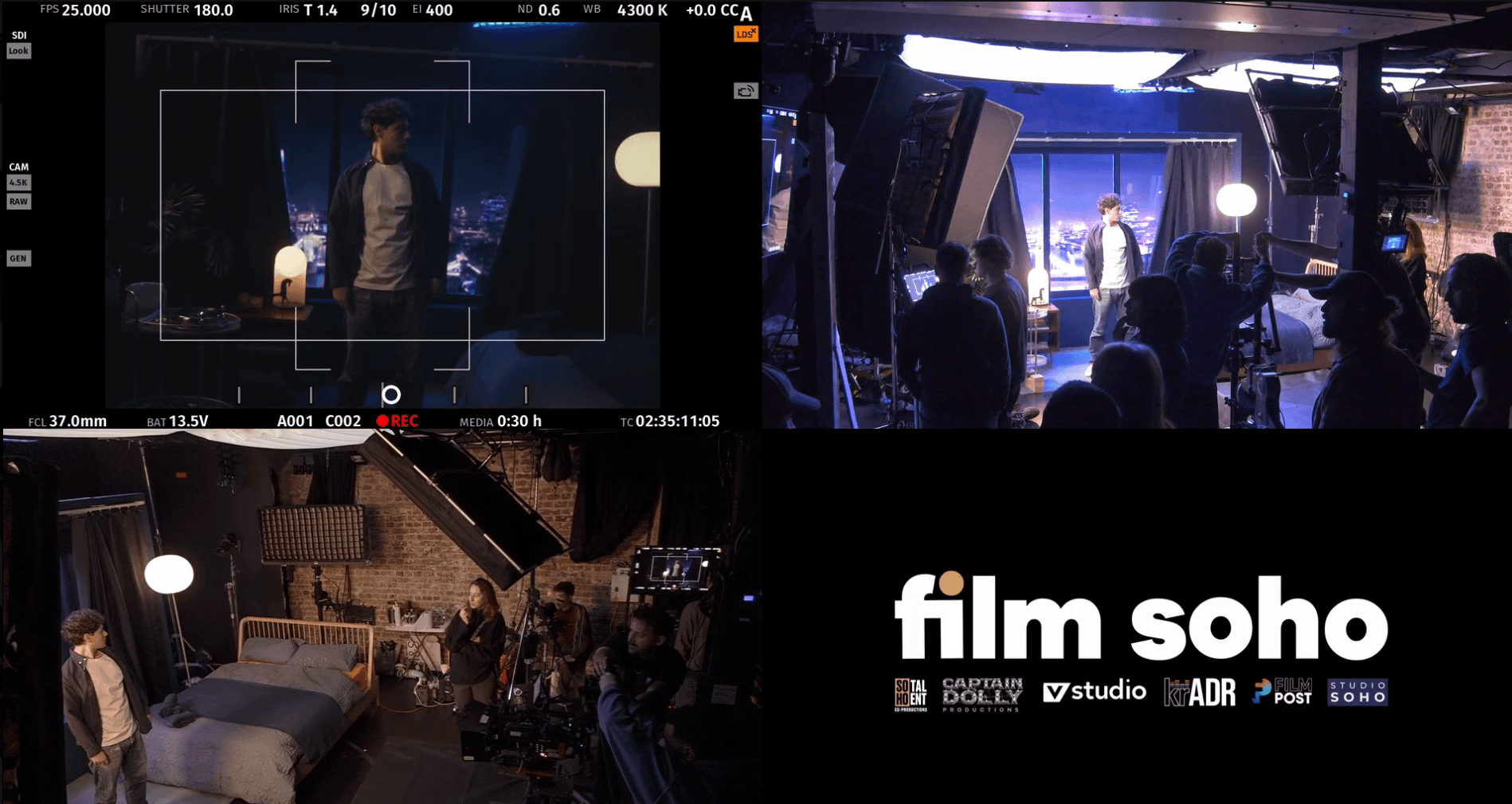
The studio's Kino Flo MIMIK system is central to how we approach lighting in the volume. The fixtures are hybrid video-lighting tiles: they can mirror the content playing on the LED wall, so the light falling on talent and set pieces carries the same colour and movement as the world behind them. We control which fixture mirrors which section of the plate, and adjust intensity and colour temperature independently and when a scene calls for it, they drop back to working as conventional fixtures with no content running at all.
Their colour fidelity is what makes them worth the setup. In a virtual production environment, any mismatch between the wall and the fixtures lighting the foreground shows up immediately in camera, and it's the kind of error that lands squarely in post if it isn't caught on the day.
On OREO Night Twist, that mattered more than usual. The plates carried a wide, saturated colour range and a lot of movement across the environment changes. Driving the MIMIKs from that content meant the foreground moved with it the talent lit by the same shifting colour as the world he was standing in, rather than sitting in front of it.
Lighting from the content itself
The studio's Kino Flo MIMIK system is central to how we approach lighting in the volume. The fixtures are hybrid video-lighting tiles: they can mirror the content playing on the LED wall, so the light falling on talent and set pieces carries the same colour and movement as the world behind them. We control which fixture mirrors which section of the plate, and adjust intensity and colour temperature independently and when a scene calls for it, they drop back to working as conventional fixtures with no content running at all.
Their colour fidelity is what makes them worth the setup. In a virtual production environment, any mismatch between the wall and the fixtures lighting the foreground shows up immediately in camera, and it's the kind of error that lands squarely in post if it isn't caught on the day.
On OREO Night Twist, that mattered more than usual. The plates carried a wide, saturated colour range and a lot of movement across the environment changes. Driving the MIMIKs from that content meant the foreground moved with it the talent lit by the same shifting colour as the world he was standing in, rather than sitting in front of it.
What the job proves
Three days on the stage. Several distinct worlds, each one finished in camera, with post left to do what post should do finish the film rather than build it.
What made this work wasn't the size of the setup. It was how early the decisions were made. A single jib arc. Well-developed 2D plates. Physical props doing the parallax work. Lighting driven from the content itself. Each of those was a deliberate choice, worked out in previs inside a to-scale model of the stage the shoot would actually happen on and together they meant the schedule was never fighting the creative.
That's the argument for virtual production on fast-turnaround commercial work. Not that it can do things nothing else can, but that it moves the expensive, contested decisions forward into prep, where changing your mind is cheap. By the time the camera rolls, everyone in the room is looking at the same image.
Planning a commercial on a tight schedule?
V Studio is a virtual production volume in the heart of Central London, part of the Film Soho ecosystem with in-house previs, image-based lighting and technical support built in. We're happy to run a feasibility conversation early often the most useful thing we do is tell a production honestly whether the volume is the right tool for their brief.
What the job proves
Three days on the stage. Several distinct worlds, each one finished in camera, with post left to do what post should do finish the film rather than build it.
What made this work wasn't the size of the setup. It was how early the decisions were made. A single jib arc. Well-developed 2D plates. Physical props doing the parallax work. Lighting driven from the content itself. Each of those was a deliberate choice, worked out in previs inside a to-scale model of the stage the shoot would actually happen on and together they meant the schedule was never fighting the creative.
That's the argument for virtual production on fast-turnaround commercial work. Not that it can do things nothing else can, but that it moves the expensive, contested decisions forward into prep, where changing your mind is cheap. By the time the camera rolls, everyone in the room is looking at the same image.
Planning a commercial on a tight schedule?
V Studio is a virtual production volume in the heart of Central London, part of the Film Soho ecosystem with in-house previs, image-based lighting and technical support built in. We're happy to run a feasibility conversation early often the most useful thing we do is tell a production honestly whether the volume is the right tool for their brief.
Credits
Client: OREO (Mondelēz) · Agency: Saatchi & Saatchi · VFX & CGI: Publicis Production · Director of Photography: Billy Kendall · CGI Art Director: Steve Azancot · Virtual Production: V Studio at Film Soho
OREO Night Twist was featured in the February/March 2026 issue of Definition.
Credits
Client: OREO (Mondelēz) · Agency: Saatchi & Saatchi · VFX & CGI: Publicis Production · Director of Photography: Billy Kendall · CGI Art Director: Steve Azancot · Virtual Production: V Studio at Film Soho
OREO Night Twist was featured in the February/March 2026 issue of Definition.
Ready to recce?
Book a studio tour or request the full kit list.
ADDRESS
1-2 Portland Mews
London W1F 8JE